Currently, the White House aims to make the US into a net-zero emissions economy by 2050. As we are very reliant on fossil fuels to power our economy both domestically and globally, such a goal might seem very lofty and elusive. However, there are steps being taken to ensure that we reach this seemingly impossible achievement. One of these steps is the Inflation Reduction Act, which was recently passed in order to combat the rapid inflation that has arisen in recent years as well as push for the decarbonization of the transportation industry, shift the US as a whole to renewable energy and energy efficiency, and clean up pollution.
The White House’s approach to decarbonizing the transportation industry is very focused on consumers. With a $4,000 tax credit for the purchase of a used EV (Electric Vehicle) and $7,500 tax credit for the purchase of a brand new EV, it is apparent that the focus that solution that has been put forth is to try to cause widespread change and reduction in emissions purely by pushing for consumers to take action, rather than directly addressing corporations. However, even though a more direct approach that is focused on addressing the massive carbon footprint of corporations (such as more regulation on production, or maybe a tax break for corporations that operate at a more “green” standard) might be more desirable, such change would be very drastic if done to a degree that would result in immediate and drastic change in carbon emissions. The tax credit for the purchase of EV’s are being passed in tandem with the Infrastructure Investment and Jobs Act, which provides 7.5 Billion dollars to build out charging infrastructure. Some may object to such a goal, saying that building out such infrastructure would only result in more carbon emissions in the process, however, the long term usage of charging stations and the shift from fossil fuel powered vehicles as a whole would offset this momentary increase in the long run. The third part of the Infrastructure Investment and Jobs Act and Inflation Reduction Act’s tandem approach is the allocation of 5 Billion dollars to replace school buses across America with zero-emission school buses, most likely electric powered ones. These buses could be fueled using the built out charger infrastructure, and would reduce carbon emissions greatly assuming that the initiative was put into place nationwide. The only possible issue with the decarbonization of the transportation industry as it has been outlined in these two policies is the issue of where the electricity in the new charging stations comes from. This concern is actually addressed in the Inflation Reduction Act’s approach to shifting the US as a whole from coal-powered electricity to more renewable energy resources.

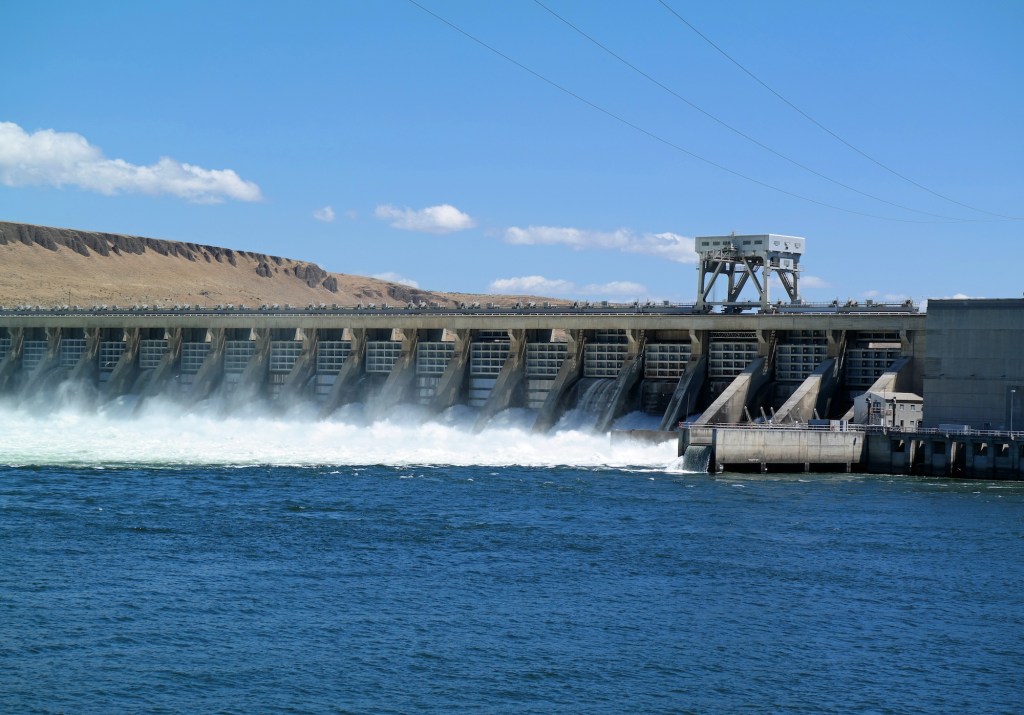
Currently, the US relies on natural gas for 60 percent of its energy generation. The Inflation Reduction Act plans to change this by giving companies that create solar, hydro, and wind powered electricity generation initiatives tax credits worth 270 Billion Dollars over the next 10 years. This is amending the Production Tax Credit and Investment Tax Credit that have already been put forth to the same end, and making the tax credit worth even more. This credit goes further than purely renewable energy generation, the tax credit will also apply to clean battery manufacturers (battery manufacturers who follow a “greener” production process). In spurring such a company, the Inflation Reduction Addresses one of the main concerns with the EV Initiative that was put forth at the ASEAN Conference in May. With this in mind, it is easy to see that if the tax credits prove to be sufficient motivation for the targeted companies to replace the nationwide reliance on coal-generated electricity, there could potentially be a global decrease in emissions.
While the Inflation Reduction Act puts forth the framework for future improvements for carbon emissions, it also provides some important solutions for addressing pollution that exists right now. It invests 3 Billion Dollars in the form of 3 year grants to companies that will help reduce extreme heat, monitor air pollution, and increase resilience or adaptation in ecosystems. Much like the Inflation Reduction Act, the Infrastructure Investment and Jobs Act is also helping fight pollution right now by providing 21 Billion Dollars in environmental remediation funds, 4.7 Billion of which is being dedicated to plug, remediate, and restore orphaned oil wells which leak methane (a Greenhouse Gas that contributes greatly to global warming). Finally, the Inflation Reduction Act also launched the US’s first national climate bank with a 27 Billion Dollar contribution to the Greenhouse Gas Reduction Fund. Much like the initiatives dedicated to the decarbonization of the transport industry, these contributions will be used to shift the US from coal-generated electricity to more renewable sources such as hydro and solar power.
The multifaceted approach that the Inflation Reduction Act as well as the Infrastructure Investment and Jobs Act takes does a fantastic job of putting forth long term plans for moving America to the goal of becoming a net-zero emissions country by 2050. All possible holes in their strategies are accounted for, such as the issue of the battery production necessary for nationwide EV reliance. Such legislation is a step in the right direction for long term reductions in carbon emissions, as well as the conservation of the precious land that we have today.
Sources:
 The Policy Greenhouse
Leave a comment