The Keystone Pipeline was a pipeline spanning from Hardisty, Canada all the way down to Houston, Texas. This project was incredibly ambitious, seeing as such a project would have improved energy infrastructure greatly, while also helping to grow the US’s oil exports. Furthermore, because the US relies a lot on imported crude oil, the Keystone Pipeline would have helped to make the US much more self-sufficient. Right now, the US is not only reliant on Mexican oil imports, but also is still relying on some overseas suppliers via OPEC (Organization of the Petroleum Exporting Countries). This current arrangement is simply not sustainable, seeing as the daily demand for oil is projected to rise by 3.1 Million Barrels by 2035. Along with this rise in demand, it seems like reliance on crude oil is here to stay as well. Crude Oil use has accounted for 37% of the US’s primary energy use since 1949, and does not appear to be changing.
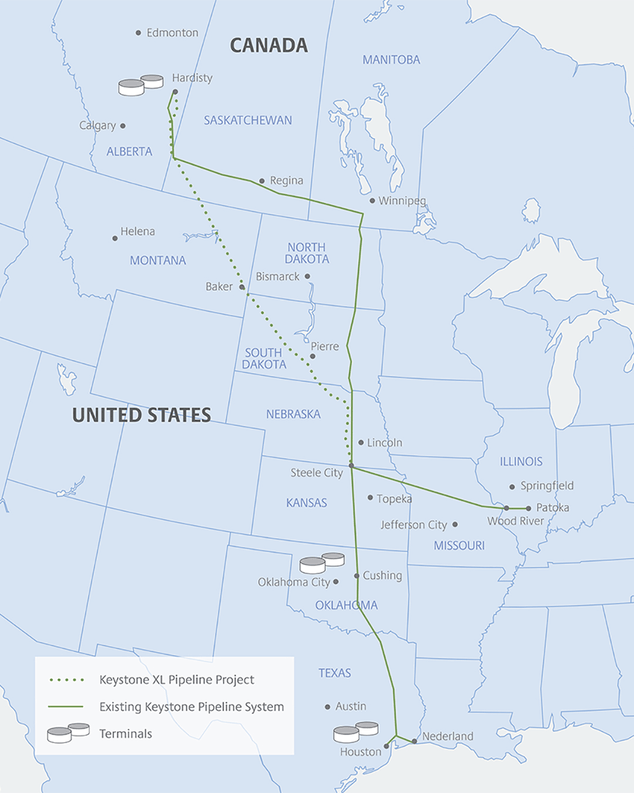
This is where the Keystone Pipeline would come in, making the US a lot more energy sufficient. At least that is why many advocates for the pipeline were pushing so hard for it to get built. In reality however, the pipeline would not be the magical fix that many people were looking for. According to the NRDC (Natural Resources Defense Council), the majority of the oil that the pipeline produces would be exported to other countries for sale, rather than being consumed domestically. It is for this reason that the pipeline would not lower gas prices and make energy more affordable, like many were assuming it would.
This fact alone, however, was not the nail in the coffin for the Keystone Pipeline. When the project was announced, there was a lot of outcry surrounding the environmental concerns that arose as a result of such a project. For one thing, the mining operation in Hardisty that would help to generate the oil flowing through the pipeline would be built in part of Canada’s Boreal forest, one of the most important carbon sinks in the region. This is where a lot of misunderstanding stems from as well. Many make the argument that the burning and usage of oil itself does not release a lot of carbon compared to another fossil fuel such as coal, but the mining operations that are needed to reach oil are where the concern arises. The destruction of such a large area of a carbon sink would make all GHG (Greenhouse Gas) emissions even more severe in that region, because much less carbon would be getting absorbed.
The aspect of Environmental Justice had to be considered as well. This large pipeline would pass through much indigenous land, putting those communities under unnecessary risk for oil spills. The pipeline would hurt the natural environment around it, and its presence would worsen rather than improve the quality of life for those communities that the pipeline runs through. That is why many argue that this pipeline is not a “pipeline to America” but rather a “pipeline through America”.
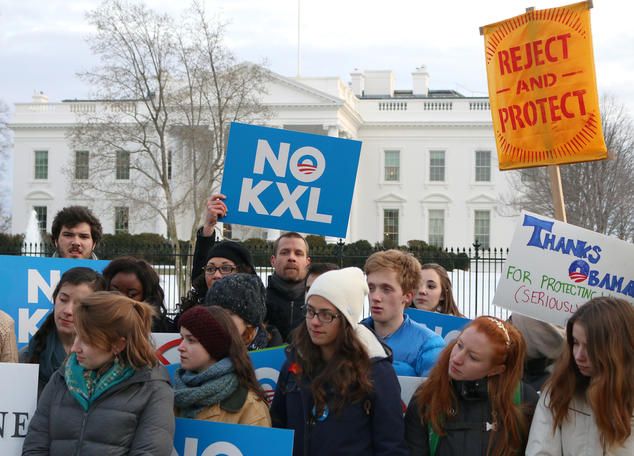
Apart from the long term implications of building the Keystone Pipeline, an environmental disaster that arose in the short term was reason enough to shut it down. The Keystone Pipeline carries tar-sand oil rather than the lighter, conventional crude oil. Because of the nature of tar-sand oil, pipelines moving tar sand oil leak more frequently than pipelines carrying conventional crude oil. In fact, between 2007 and 2010, pipelines moving tar sands oil in Midwestern states spilled three times more per mile than the U.S. national average for pipelines carrying conventional crude. Since the Keystone Pipeline system went into effect in 2010, it has leaked more than a dozen times. The Keystone XL Pipeline in particular (the one going from Hardisty to Houston) leaked more than 378,000 gallons in North Dakota, destroying the surrounding ecosystem. These spills are even more disruptive to the natural world than conventional crude oil spills. This is because tar-sand oil sinks directly to the bottom of any waterways that it comes in contact with. Two years after the North Dakota catastrophe however, the project was finally pulled.
The decision to ultimately pull the plug on the Keystone XL Pipeline was the right one to make. While weighing the potential positives that would come out of the pipeline, it is important to see that while such a structure would create thousands of jobs and help increase the US’s oil exports, the risks simply outweigh the rewards. The economic benefits might help boost the profit margins of major energy companies, but this additional success would be at the price of the future of the environment, and the safety of many communities in the US.
Sources:
The Keystone XL Pipeline: Everything You Need To Know | NRDC
TC Energy’s Keystone pipeline may be ‘unsaleable’ this year due to spill, analyst says (yahoo.com)
Why the Keystone Pipeline Will Be Built: 10 reasons – CBS News
 The Policy Greenhouse
Leave a comment